Category Archives: Poetry Lounge

Poetry and spoken word from The Funk Jazz Lounge

Blue Note Residency Season: Where Jazz and the Spoken Word Share a Stage

Published October 29, 2026 · Poetry Lounge

Jazz and poetry share a particular kind of courage: the willingness to begin without knowing exactly where the moment will lead. A saxophone can turn a simple phrase into a question; a poet can leave a silence that feels like a whole verse. When these art forms meet, neither is merely decoration for the other. They listen, respond and make something new in real time.

That connection is alive across the fall’s jazz-and-spoken-word circuit: from New York’s Blue Note to intimate community stages in Atlanta, San Antonio and beyond. The Poetry Lounge has always belonged in that conversation. Poetry lives on the page, certainly. But it also lives in the breath before a line, the bass note beneath a confession, and the room that gathers to hear both.

Robtober: a month of musical conversation

Robert Glasper’s eighth annual Robtober residency at Blue Note New York has brought a month of changing lineups and unexpected chemistry to the club. Running October 1 through November 1, the residency is a reminder that jazz is not simply a repertoire. It’s a practice of being present, with the musicians beside you, and with whatever the room gives back.

Earlier in the month, Glasper shared the stage with Questlove and special guest Bilal on October 21. The pairing makes sense in a city where jazz, hip-hop and soul have long spoken across genre lines: Questlove’s rhythmic imagination, Bilal’s expressive voice and Glasper’s piano all offer different ways into the same conversation.

Robert Glasper, Questlove and Bilal at Blue Note New York

The residency has continued to evolve. Glasper performed with Kem on October 24 and 25, and the closing stretch brings bassist Derrick Hodge and drummer Chris Dave into the mix. Their run continues October 28–30, with an additional Halloween performance on October 31, before the November 1 finale. Details and updates are available through the Blue Note’s official event page.

Why does a residency like this feel so close to spoken word? Because improvisation is a form of listening made audible. A drummer leaves space; a pianist answers. A poet shifts tempo or leans into a word, and the musicians follow its feeling rather than a fixed arrangement. The result can be tender, restless, funny or surprising, sometimes all in the same set.

That’s a familiar pleasure in poetry, too. A line lands, the audience absorbs it, and the next line arrives changed by the silence that came before.

The mic, the band and the living poem

Across the country, community stages are making that exchange their central event. In Atlanta, Poetic Jazz has brought music and poetry together in settings that feel personal and welcoming. Its October 13 D’Angelo tribute at Plywood Place offered a chance to revisit the artist’s soulful musical world alongside spoken-word expression. And on October 27, Poetic Jazz took the experience outdoors for a backyard concert at Elysian Dreams. An intimate evening planned beneath the stars.

Poetic Jazz’s backyard concert in Atlanta

The setting matters. A close room, a backyard, a gallery: each changes how we hear. In a smaller space, a poem doesn’t have to fight for attention. You can hear the grain in a voice, the room’s response, the moment a musician catches a rhythm in a reader’s delivery. It becomes less like watching a performance and more like being invited into one.

San Antonio’s Jazz Poets marked a milestone on October 24, celebrating 20 years of bringing improvising musicians and poetry together. The group’s approach captures the spirit of the form: a poet shares a piece, and the band discovers its musical shape in the moment. The words aren’t simply laid over a finished track. They become a score of sorts. One the musicians interpret as it unfolds.

The Jazz Poets of San Antonio 20 Years Celebration

At its anniversary celebration, the group welcomed poets, first-timers and listeners into that exchange. The event listing describes a tradition led by Eduardo C. Garza, where musicians respond to each reader’s rhythm, emotion and energy. That kind of open, attentive collaboration is part of what keeps the poetry lounge alive: the poem may be written, but its musical life is still being discovered.

From Atlanta to Kansas City: many ways into the room

Atlanta’s Hii Note brought its own blend of poetry, soul and live-band energy to Paschal’s on October 28. Hosted by Jamellow Moore and presented by Hiibrid Collective and MellowVzn, the showcase featured local artists in an intimate setting. The Hii Note event page framed the evening as a celebration of artistry, community and soulful expression.

Hii Note’s live music and poetry showcase

That same night, Kansas City had a different kind of poetry-and-jazz encounter: T.S. Leonard’s A Night of Poetry, Jazz, and Time Travel, with a reading, conversation and a performance by the Mighty Mo Jazz Orchestra. One evening, two cities, distinct rooms, and a shared belief that words and music can open unexpected doors.

These events don’t all sound alike, and they don’t need to. Some center a featured artist; others make space for an open mic. Some lean toward soul and hip-hop, others toward improvisational jazz or the literary voice. What connects them is the attention they ask of us. To listen closely. To leave room for another person’s expression. To let a phrase, or a note, stay with us after the show.

Keep the spoken moment close

You don’t need to be in a club to make room for that kind of listening. Put on a record and notice where the singer’s phrasing starts to feel like a poem. Follow a saxophone as it stretches a thought beyond words. Or return to a line you love and hear its rhythm as if a band were answering.

At The Funk Jazz Lounge, our SPOKEN MOMENT playlist tradition celebrates that meeting of voice, rhythm and reflection. Explore it alongside the Lounge’s playlists, then tune in to the 24/7 stream whenever you want a little more soul in the room.

The season’s stages remind us that poetry isn’t only something we read. It can be a voice finding its pace, a bass line answering a sentence, or a room full of people listening together. Keep an ear open. The next conversation might begin with a single word, or one beautifully placed note.

wHIMSY!: How Destin Conrad Slipped Spoken Word Into the Smoothest Jazz Record of the Summer

Some albums make room for poetry by stopping the music. Destin Conrad’s wHIMSY! does something more inviting: it lets the spoken word settle into the arrangement, sharing space with the voice, the brass and the hush between notes.

That choice is clearest on “GLORY a poem by Bay Davis,” a brief spoken-word passage placed near the beginning of the album. At just 41 seconds, it’s a small moment with a generous effect. The poem isn’t decoration laid over a jazz record; it helps establish how to listen. Here, language can carry rhythm, mood and meaning just as an instrument can.

It’s a fitting entry point for an album that moves between alternative jazz and intimate R&B without treating those worlds as separate rooms. For listeners who follow neo soul and jazz, and for anyone drawn to poetry, the door is open.

A poem that belongs inside the music

“GLORY” is credited directly to poet Bay Davis, and that credit matters. The poem isn’t tucked away as an anonymous voice or a bit of studio color. It arrives with authorship, presence and its own place in the sequence.

Its brevity also feels deliberate. A spoken piece doesn’t need to unfold into a full performance to make an impression. Sometimes a few carefully placed words can change the air around everything that follows. After “GLORY,” a listener may find themselves attending differently: to a pause, a breath, the grain of a vocal, the way a lyric can land like a line of verse.

That’s where wHIMSY! makes its poetry-first case. Spoken word isn’t a detour from the album’s musical center. It’s part of the texture. Another voice in the room, another way to shape the feeling. The result offers a natural bridge between two audiences who often share a taste for intimacy, but don’t always meet on the same record.

A spoken-word performer at a microphone in an intimate, dimly lit jazz room

The room around the voice

The album’s atmosphere feels close-up and unhurried: the kind of after-hours setting where a soft-spoken line can hold a room’s attention. Its reported spontaneous Los Angeles sessions, shaped by live brass, piano and brushed drums, suit that feeling. The point isn’t to make the arrangements sound grand; it’s to let them breathe.

That breath is part of the appeal. Live instrumentation gives the songs a sense of human timing. The slight give and pull of musicians responding to one another. Piano can offer a glow rather than a spotlight; brushed percussion can suggest motion without demanding it. Brass, when it enters, brings warmth and dimension to the edges.

Conrad’s intimate R&B sensibility keeps the album welcoming, while the jazz palette lets it wander. The music can feel polished without turning stiff, sensual without becoming syrupy. It’s well suited to late-evening listening, but not only as background. Give it your attention and the small shifts (the pause, the entrance, the change of color) start to feel like part of the conversation.

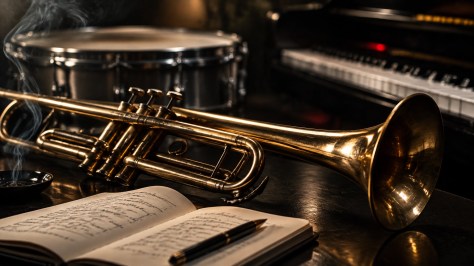
Close-up of a brass trumpet beside an open notebook in a dim jazz studio

A gathering of distinct voices

The guests add character without pulling the album in competing directions. Trumpeter Keyon Harrold appears on “wHIP” and “drifting,” bringing a jazz presence that feels at home in the album’s open, fluid atmosphere. Terrace Martin, an artist whose work has long resonated with the Lounge’s musical universe, joins Conrad on “wASH U AWAY” and “NOTHING IS REAL.” His contributions underline the conversation between modern R&B and jazz that runs through the project.

Elsewhere, Vanisha Gould is featured on “A Lonely Detective” and “BOREDOM”; Ambrè appears on “AMBRÈ’S INTERLUDE BUT JAZZ”; and “The W” brings together James Fauntleroy and Astyn Turr. These aren’t simply names lined up for a credits check. Across the album, the collaborations give its world a communal feel, like different artists taking turns at the mic, piano or edge of the conversation.

That quality makes the poetry feel even more at home. A poem spoken by one voice, a trumpet phrasing in another register, a singer leaning into a lyric: each has its own way of telling you where you are. wHIMSY! gives them room to coexist.

Pianist’s hands above a grand piano in a warmly lit late-night recording room

A tracklist with room to drift

The album’s 18-track edition moves in short, varied scenes, with “GLORY” among the earliest invitations to listen closely. The sequence also makes space for titles that suggest different moods, from “LOVE!” and “BOREDOM” to “HARD!” and “AFTER LAST NIGHT.” “AMBRÈ’S INTERLUDE BUT JAZZ” even signals its playfulness right in the name.

There’s no need to approach the record like a set of instructions. Start at the beginning and let it unfold, or return to “GLORY” and follow the mood outward. The brief interlude is a small portal into the album’s larger idea: music doesn’t have to choose between groove and reflection. It can make room for both.

For those who want to explore the collaborators’ interplay, “wASH U AWAY” is a good next stop. Destin Conrad’s official video for the track with Terrace Martin offers another way into that shared musical space. For full credits and the complete tracklist, see the album listing on Apple Music.

Let the poem stay with you

We marked wHIMSY! on our Instagram calendar with an announcement on August 14 and a release moment on August 21. In this September listening mood, the record still feels made for lingering: not just a smooth soundtrack, but an invitation to notice how sound, language and atmosphere can meet.

That’s the pleasure of “GLORY.” It doesn’t interrupt the groove to make room for poetry. It shows that poetry can be part of the groove.

Let the album play late, let the lines settle, and see what you hear on the second pass. Then bring that same attentive ease to the Funk Jazz Lounge 24/7 stream, and tune into the SPOKEN MOMENT vibe, where music, poetry, art and culture share the same room.

Jazz and Poetry: 10 Soul-Stirring Reasons This Duo Is Making a Comeback in 2026

There is a particular kind of electricity that happens when a poem meets a jazz rhythm.

The words gain movement. The music gains a voice. A bassline becomes a pulse beneath the story, while the piano leaves just enough space for a sentence to land, breathe, and linger. In 2026, that conversation between jazz and poetry is finding a new generation of listeners: and a much wider stage.

From major festival programming to intimate listening rooms and livestream poetry events, the pairing is no longer a niche experiment. It is part of a broader cultural appetite for work that feels thoughtful, soulful, and alive.

At The Funk Jazz Lounge, this connection has always been central to the experience. Our nationally syndicated show brings Neo Soul, funk, jazz, spoken word, art, and culture into one sophisticated groove. The Poetry Lounge segment carries that spirit forward: a space where the voice and the rhythm meet.

So why is jazz and poetry resonating so deeply right now? Here are ten soul-stirring reasons.

1. Jazz gives poetry room to breathe

Poetry does not need to compete with jazz. It moves through it.

Unlike a rigid musical backdrop, jazz creates an atmosphere of possibility. The drummer can shift the tension. The pianist can answer a phrase. A saxophone can rise after the final word and say what language cannot.

That freedom makes jazz an ideal companion for spoken word. The music supports the poem without telling the listener exactly what to feel. It leaves room for interpretation: and for the listener’s own memories to enter the performance.

In an age of constant noise, that kind of spaciousness feels luxurious.

2. Spoken word is reclaiming the spotlight

Spoken word has always been powerful, but its visibility has expanded dramatically across stages, screens, festivals, and social platforms. Contemporary poets are bringing personal testimony, social commentary, romance, humor, and history into performances that feel immediate and deeply human.

The resurgence is not simply about poetry returning to the stage. It is about audiences seeking language that speaks directly to the moment.

The work of artists such as aja monet demonstrates how poetry, improvisation, and contemporary jazz can occupy the same artistic space. The result is neither a traditional reading nor a conventional concert. It is something more fluid: an experience built from rhythm, language, and presence.

3. Audiences want music with meaning

A beautiful groove can carry you through an evening. A beautiful groove with something to say can stay with you for years.

Many listeners are looking beyond background music. They want songs and performances that reflect identity, memory, love, community, resistance, and possibility. Jazz brings harmonic sophistication and emotional depth; poetry brings narrative clarity.

Together, they meet a cultural moment that values both feeling and thought.

This is part of what gives The Funk Jazz Lounge its distinctive character. The show’s blend of artists such as Erykah Badu, Maxwell, Jill Scott, Tems, and Leon Thomas with voices including The Last Poets, Gil Scott-Heron, and Saul Williams creates a listening experience that is musically rich and intellectually awake. Explore the full radio show experience to hear how those worlds can flow together.

4. The pairing honors jazz’s living history

Jazz and poetry are not strangers meeting for the first time. Their relationship runs through the history of Black creative expression.

From the literary rhythms of the Harlem Renaissance to the politically charged work of the Black Arts Movement, artists have long used sound and language to document experience, challenge convention, and build community. Spoken-word pioneers and socially conscious musicians helped establish a tradition where the microphone could be both an instrument and a platform.

What feels like a comeback is also a continuation.

In 2026, new artists are drawing from that lineage while adding electronic textures, hip-hop cadences, neo-soul warmth, and global influences. The form is evolving without losing its roots.

Open poetry notebook, vintage jazz record, saxophone mouthpiece, and headphones in a dark lounge setting

5. Genre boundaries are becoming less important

Does a performance need to be labeled jazz, spoken word, hip-hop, soul, or experimental music?

Increasingly, listeners are comfortable with “yes.”

The contemporary jazz stream reflects this change. A single hour may move from a smoky instrumental passage to a poetic monologue, then into a beat-driven vocal performance or an unexpected electronic interlude. The transitions are part of the pleasure.

This genre-fluid approach also invites new listeners into jazz. Someone who arrives through poetry may stay for the saxophone. Someone who comes for Neo Soul may discover a classic jazz recording. Curiosity becomes the bridge.

That spirit is visible in the programming of events such as the Monterey Jazz Festival and the wide-ranging calendars of organizations including SFJAZZ and the Stanford Jazz Festival.

6. Livestreamed poetry events make intimacy global

Poetry has always depended on intimacy: one voice, one room, one shared moment.

Livestreaming does not eliminate that intimacy. Done well, it extends it.

A listener in Atlanta, London, Miami, or Los Angeles can enter a poetry-and-jazz performance happening hundreds or thousands of miles away. They can hear the room’s silence before a line, feel the audience respond, and participate in a cultural gathering without leaving home.

Major jazz organizations have helped make this format feel natural. Jazz at Lincoln Center’s Jazz Live brings concerts, conversations, and special programming to viewers on connected devices. Meanwhile, venues such as The Jazz Gallery continue to list live and livestream options, creating new pathways for discovery.

For poets and musicians, that reach can be transformative. A local collaboration can become a global conversation.

7. Hybrid events meet modern life

Not everyone can make a late-night show in New York. Not everyone lives near a jazz club, literary venue, or experimental arts space. Work schedules, caregiving, travel, and geography all shape how people experience culture.

Hybrid programming makes room for real life.

You can attend in person when the evening calls for velvet curtains and candlelight. Or you can tune in from your living room, headphones on, with the city quiet outside your window. Both forms of attention matter.

This flexibility is especially meaningful for poetry, where the quality of listening often matters more than the size of the room. A well-produced livestream poetry event can preserve the emotional focus of a small gathering while opening the door to a much larger audience.

8. Jazz and poetry create space for dialogue

Jazz is built on conversation. One musician proposes an idea; another responds. The ensemble listens, adapts, and creates something that did not exist before.

Poetry works similarly. It asks us to consider another person’s interior world. It can name what has been overlooked, bring history into the present, or offer a new way to understand the ordinary.

That makes the pairing especially relevant to culturally engaged audiences. It is entertainment, certainly: but it is also an invitation to think, feel, and remain open.

International Jazz Day, organized with UNESCO and global partners, continues to frame jazz as a language of dialogue, freedom of expression, and cultural understanding. Poetry belongs naturally within that conversation.

9. The experience feels made for intentional listening

There is a difference between hearing music and listening to it.

Jazz and poetry reward attention. They encourage you to notice the pause before a phrase, the change in a chord, the breath beneath a line. They invite you to put the phone down: or at least use it to find the right playlist: and let the moment unfold.

This is why the duo works so beautifully in a lifestyle setting. Put on a contemporary jazz stream while preparing dinner. Let spoken word accompany a late-night drive. Play a podcast archive while journaling, sketching, or simply watching the lights move across the room.

Music, poetry, art, and culture become part of the texture of your day rather than an interruption to it.

Poet performing with a jazz trio during a livestreamed intimate cultural event

10. The connection is deeply communal

At its heart, jazz and poetry are about gathering.

They create a space where people can arrive with different backgrounds, references, and experiences, then meet inside a shared rhythm. The performer is not speaking into a void. The musicians are not playing in isolation. The audience completes the exchange through attention.

That sense of community is just as important online as it is in a club. A live chat, a shared playlist, a podcast recommendation, or a message sent after a performance can extend the conversation long after the final note.

The The Funk Jazz Lounge Gallery reflects this larger vision: a world where sound exists alongside imagery, ideas, and cultural memory. The Lounge is not only a place to hear music. It is a way to move through the world with more style, curiosity, and feeling.

Let the words find the rhythm

The return of jazz and poetry is not a revival built on nostalgia alone. It is a living movement: one that understands the past, responds to the present, and leaves room for what comes next.

The poetry is sharper. The jazz is freer. The platforms are wider. And the need for meaningful connection has never been clearer.

Whether you are discovering spoken word over jazz for the first time or returning to a sound that has always felt like home, make space for the experience. Put on your headphones. Turn down the lights. Let the bassline settle in.

Then tune into The Funk Jazz Lounge, where Neo Soul, funk, jazz, poetry, art, and culture share the same room( whenever you are ready to enter.)

Saul Williams’ Leap Life: The Poet’s Album That Turns the Voice Into an Instrument

Poetry Lounge | September 2026

There are albums that begin with a beat, and albums that begin with a voice asking you to listen differently. Saul Williams’ Leap Life, released August 28 through Big Dada/Ninja Tune, begins with the latter. Across 14 tracks, Williams speaks, chants, improvises and testifies, not as a poet laid over a backing track, but as a musician whose instrument is language itself.

We first flagged the project in our August 11 Instagram announcement, then returned to it on release day. In September, with Williams’ new poetry book also in the conversation, Leap Life feels like a natural fit for the Poetry Lounge: an album that invites you to hear the poem in the rhythm, the breath and the spaces between words.

When the voice becomes the arrangement

Williams has described the record through a simple idea: “the voice is the instrument.” The phrase is more than a neat summary. It suggests a different way of listening: one that pays attention not only to what a line means, but to how it moves. A voice can strike like percussion, stretch into a chant, ride a hip-hop cadence or hold a moment open like an improvising soloist.

That approach is at the heart of Leap Life. Its musical world draws from spoken word, abstract jazz, hip-hop, West African rhythmic logic, ambient composition and ceremonial sound. Rather than settling into one genre’s rules, the album lets those languages meet and shift around the poem. As Ninja Tune’s album notes put it, the music embraces spontaneity and treats language as a rhythmic, vibrating force.

Saul Williams, photographed in front of a wood-paneled wall with carved masks

That makes the album less about tidy verse-chorus arrivals than about attention. Listen for a change in cadence, the weight of a repeated phrase, or the way a thought can feel both intimate and declarative. Williams’ voice isn’t simply delivering a poem over music; it is part of the music’s texture and motion.

Ancestors in the room

The album’s titles alone suggest its concern with memory and inheritance. “Baobab Constellation” and “Great, Great-Grandmother” look toward roots and lineage; “Controlled Is Not Controllable,” “Not Everything For Sale” and “Robot Slave” point toward power, technology and the forces that try to place a price, or a limit, on human life.

These are not disconnected subjects. Across Leap Life, resistance and ancestral memory sit in the same frame. The past is not a distant backdrop but a living presence, something that shapes the choices and struggles of the present. That sense of conversation across generations gives the record a ritual quality without making it feel remote. The music asks you to take part: to hear, reflect and carry something forward.

Here, the album’s place in spoken word’s wider history matters. The Last Poets helped establish a powerful meeting of poetry, percussion and political address; Saul Williams belongs to a later generation of artists who continue to test what can happen when poetry takes musical form. The connection is a lineage of possibility rather than a claim that these are the same sound. Williams brings that inheritance into a contemporary collage of jazz abstraction, hip-hop and electronic atmosphere.

The company’s SPOKEN MOMENT playlist tradition has always made room for poetry as something to hear, not just read. Leap Life carries that spirit into album form: words with pulse, a performance shaped by breath, and ideas that continue to resonate after a track ends.

Saul Williams’ Leap Life vinyl edition, showing the album sleeve and two black records

The poetry is political, and personal

Williams’ new book, Songs My Mother Taught Me: Why the Artist Must Take Sides, was published by Haymarket Books on September 8. It considers the artist’s responsibility in the face of injustice and makes clear why the word “poet” is essential to understanding his work. The book and album are distinct works, but they share a belief in art as a way to confront the world rather than look away from it.

That context sharpens the force of titles such as “Controlled Is Not Controllable” and “Not Everything For Sale.” They carry the friction of a voice insisting that people, histories and imaginations cannot be reduced to what power can manage or markets can own. “Robot Slave” brings technology into that reflection, while “Friends I Ain’t Met Yet” turns toward connection that reaches beyond the immediate and familiar.

The guest artists deepen the album’s sense of a shared conversation. Carlos Niño, Moor Mother, Kamasi Washington and Robert Del Naja are among the collaborators named around the release. Their presence places Williams’ voice within a wider field of musical and poetic perspectives, without making the album’s central point of view any less distinct.

The Leap Life vinyl package, featuring the album sleeve and red-and-gold records

A record to sit with

Leap Life rewards the kind of listening that leaves a little room around it. Put it on when you can give the words your attention, not as background to a dozen other things, but as a work that can change the atmosphere of a room. Let a phrase land before you reach for the next one. Notice where the pulse loosens and where the voice gathers force.

The album’s questions are not always comfortable, and they are not meant to be decorative. But its mix of language, rhythm and atmosphere makes the listening experience generous as well as searching. It offers no single doorway in: you might arrive through the jazz, the spoken word, the hip-hop cadence or the ritual ambience. The invitation is simply to stay present.

That is what makes Saul Williams’ Leap Life a Poetry Lounge record. It respects the poem’s power while opening the door to the groove, and reminds us that a voice can carry history, challenge control and make music without ever needing to leave the words behind.

For more listening shaped by soul, jazz, poetry and culture, tune in to The Funk Jazz Lounge’s 24/7 stream.