All posts by The Funk Jazz Lounge

Music | Poetry | Art | Culture

De La Soul at Thirty: Stakes Is High, the Album They Had to Fight to Own

Thirty years on, Stakes Is High still sounds like a clear-eyed pause in the middle of the party: a record that keeps its wit, but looks directly at what the culture is becoming. De La Soul marked the albumโ€™s anniversary on October 23 with an expanded edition that brings its original 1996 statement together with instrumentals, rarities, and newly surfaced J Dilla remixes.

The occasion is worth celebrating for the music alone. But Stakes Is High also carries a story about who gets to control a body of work, and how long listeners may wait to hear it freely. Those threads make this anniversary feel especially resonant.

A new kind of De La Soul statement

Released in 1996, Stakes Is High was De La Soulโ€™s fourth album and their first full-length without producer Prince Paul. The groupโ€™s playful spirit remained, but the mood had shifted. Instead of leaning on buoyant eccentricity, Posdnuos, Trugoy and Maseo delivered a more direct, grounded record: one that met the mid-โ€™90s head-on.

The title track sets the tone. Built around a measured, insistent beat from a young J Dilla, it gives the group room to sound thoughtful rather than carefree. The songโ€™s groove is unhurried, but its point is sharp: the cultureโ€™s direction is not something to shrug off.

That tension moves through the album. โ€œThe Bizness,โ€ featuring Common, and โ€œBig Brother Beat,โ€ with Mos Def, keep the music warm and collaborative while the writing stays alert. โ€œItzsoweezee (HOT)โ€ brings a more languid, soulful ease; elsewhere, the recordโ€™s small shifts in rhythm and texture reward close listening. This is a group that knows how to make a song inviting without making its ideas comfortable.

The album did not abandon De La Soulโ€™s personality. It deepened it. The jokes, the left turns, the intricate production and the collective chemistry are still there, but they now sit alongside a more sober question: what happens when an art form you love starts to lose its way?

Official De La Soul press photo from Reservoir Media

The remixes bring the story full circle

The anniversary edition makes the Dilla connection impossible to miss. He produced the original title track, and the expanded release includes two additional versions: โ€œStakes Is High (J Dilla Remix),โ€ featuring Mos Def and Truth Enola, and โ€œStakes Is High (J Dilla Alternate Remix).โ€

There is something moving about hearing these versions surface in an anniversary set. They extend a collaboration rooted in the original albumโ€™s moment, while offering a new angle on a song that has long felt central to De La Soulโ€™s catalogue. The remix featuring Mos Def and Truth Enola is not simply a bonus tucked at the end; it gives the title track another room to breathe, with a different balance of voices and atmosphere.

The setโ€™s 41-track sequence also includes the remastered album, instrumental edits, and additional recordings. For producers and musicians, those instrumentals offer a chance to hear the architecture more clearly: where the drums sit, how the samples carry a melody, and how a carefully chosen detail can turn a loop into a mood.

The four-LP edition presents that material on black-and-white spoke-effect vinyl in a hardcover book-style package. The official store also lists a two-CD version; Fat Beats and Get On Downโ€™s exclusive edition includes a 12-page lyric booklet. Find the release details through the De La Soul official store or listen and explore the tracklist on De La Soulโ€™s Bandcamp.

Official De La Soul Stakes Is High 30th Anniversary 4LP package image

A note for collectors: this anniversary edition is a substantial four-LP expansion, not the albumโ€™s first vinyl appearance since 1996. Stakes Is High has had vinyl reissues since its original release. What makes this set distinctive is the scale of the expanded presentation and the additional material gathered around the original album.

The long road back to listeners

For years, De La Soulโ€™s early catalogue was missing from major streaming services. Sample-clearance complications and the terms attached to the groupโ€™s former label arrangements were part of a complicated rights history that left fans unable to access key albums through the everyday platforms many listeners now take for granted.

The details deserve care. In 2021, Reservoir Media acquired Tommy Boy Music, bringing De La Soulโ€™s back catalogue into a new chapter. Reservoir later announced that the groupโ€™s first six albums would arrive on streaming services on March 3, 2023. Its account describes work between Reservoir, Chrysalis Records and De La Soulโ€™s A.O.I. label to make that release possible. The 2023 Stakes Is High credits identify A.O.I. under exclusive license to Chrysalis: a reminder that a catalogueโ€™s ownership, licensing and distribution can involve several parties, not one simple handoff.

That distinction matters. โ€œWho owns the masters?โ€ is not a footnote for artists; it can shape how music is released, heard and valued. The story of De La Soulโ€™s catalogue, including public reporting on the groupโ€™s master rights, belongs in the wider conversation about artistsโ€™ control of their work. Reservoirโ€™s announcement of De La Soulโ€™s arrival on streaming offers one account of that process.

The Funk Jazz Lounge visual celebrating De La Soul and their master recordings

Why Stakes Is High still speaks

The albumโ€™s title has aged into something larger than a mid-โ€™90s observation. It speaks to the stakes of making art, preserving it, and keeping it connected to the people who want to hear it. De La Soulโ€™s catalogue was not just unavailable in one corner of the internet; for many listeners, an important piece of hip-hop history had become harder to reach.

Now, the anniversary edition offers a different kind of access: a chance to return to the original album, hear its instrumental bones, and sit with Dillaโ€™s alternate interpretations. The expanded tracks do not replace the albumโ€™s first statement. They add context and let the musicโ€™s afterlife become part of the listening experience.

There is a quiet parallel in the way musicians and collaborators can carry a song forward across time. A recording made in one era may find new shape years later, as with Dโ€™Angelo completing โ€œThis Womanโ€ decades after the songโ€™s beginnings. In both cases, the distance between the initial spark and its eventual arrival becomes part of the story, not a reason to treat the music as an artifact, but an invitation to hear it anew.

And if you return to the title track, listen for the space around the beat as much as the beat itself. The restraint is part of its force. The record is assured enough to let its questions hang in the air.

Thirty years later, Stakes Is High remains a soulful, searching work: grounded in hip-hop, alive to jazz and R&Bโ€™s sense of feel, and sharp enough to meet the present. Put it on for the lyrics, stay for the pocket, then follow the new paths the anniversary edition opens.

When youโ€™re ready for your next listening session, tune in to The Funk Jazz Loungeโ€™s 24/7 stream, and let the groove carry you into the next record.

Danielle Ponder Testifies: Everything Has Changed and the Voice That Defended the Least Fortunate

For years, Danielle Ponder stood beside people facing the power of the legal system. Now, on Everything Has Changed, her voice takes the stand for something more personal: survival.

Released October 9 through Dead Oceans, Ponderโ€™s second album arrives with the kind of title that sounds simple until life gives it weight. The record was shaped by four years of grief and upheaval: her fatherโ€™s dementia, the death of her brother-in-law, and a miscarriage. It does not tidy those experiences into an easy lesson. Instead, it gives them room to sound as complicated as they are.

That honesty is part of the albumโ€™s force. Ponderโ€™s voice can rise with gospel-bred power, but it can also draw close and soften. Across these songs, strength isnโ€™t a mask for pain. Itโ€™s what remains when the mask comes off.

From the courtroom to the flow state

Before music became her full-time work, Ponder was a public defender in Rochester, New York, representing people who often had few resources and little power in the system. She left law in 2021 to pursue music full-time: a leap shaped by her own calling, but also by what she had witnessed in court.

In The Guardianโ€™s profile, Ponder recalls how her experiences working as a public defender confirmed what she already understood about injustice. In her NPR conversation, she reflects on the inner shift that followed: law asked her to be critical and adversarial; art asked her to trust feeling and enter a flow state.

She describes that change with striking clarity: โ€œthe mindset of the lawyer will kill me, but the artist is going to free me.โ€

Itโ€™s a line that gives the albumโ€™s title another dimension. The change isnโ€™t only what happened around Ponder; itโ€™s how she learned to meet what happened. In music, the argument need not be won before the truth can be heard.

Danielle Ponder in an official portrait photographed by Faith Joyvon

Songs that make room for grief, and for what comes next

Ponder has spoken candidly about the grief behind Everything Has Changed. In her NPR interview, she described the pain, the self-doubt, and the struggle to finish the record. Her account doesnโ€™t ask listeners to treat hardship as inspiration on demand. Instead, she speaks of resilience as the act of staying, getting up, and continuing.

That emotional candor runs through the albumโ€™s singles. โ€œSun and Moonโ€ turns toward the disorientation of love that arrives, or reveals itself, when youโ€™re already walking away. โ€œGod of You,โ€ a blues-inflected ballad, examines the way romantic devotion can become a kind of worship, and the difficult work of reclaiming your own worth. Ponderโ€™s delivery can move from tenderness to a raw, startling belt, as if the song itself has reached the limit of what it can hold quietly.

Then there is โ€œOpen Windows,โ€ released alongside the album with a video filmed at Rochesterโ€™s George Eastman House. The song begins in the fear that follows loss: the worry that love has left for good. But its openness matters. In the labelโ€™s album-release notes, Ponder describes the song as making space for new beginnings. Not a quick cure; a window, left open.

The album closes with โ€œLaurel Canyon,โ€ a gentler landing after all that emotional weather. In conversation with NPR, Ponder connects its perspective to the possibility of being present rather than running from herself. The closing track doesnโ€™t erase the hurt that came before it. It lets the listener feel a little more space around it.

Danielle Ponder in a portrait by Faith Joyvon

A voice with power, and plenty of shades

Ponderโ€™s voice is an instrument of contrasts. It can summon the church, then step back into a hushed, vulnerable register. It carries the grain and conviction of classic soul while moving through contemporary R&B, electronic textures and blues. As Varietyโ€™s review notes, the album moves between organic and digital sounds, with Ponder shifting among vocal styles without losing her distinctive presence.

โ€œPower,โ€ featuring poet and educator Reenah Golden, widens the frame beyond private grief. Built as an anthem for Black resilience and connection across the diaspora, the song reaches from the Mississippi Delta to Dakar. Ponder has spoken about how a formative trip to Senegal at 17 expanded her understanding of Black identity and possibility. Here, memory and music become a declaration of kinship.

That turn outward is essential. Everything Has Changed is intimate, but it isnโ€™t sealed off from the world. The album makes space for personal heartbreak and collective strength, for a voice asking how to survive and a voice reminding others they are not alone.

Thereโ€™s a vivid tension in that movement: confession without collapse, conviction without pretending to have every answer. The songs donโ€™t sound like legal arguments arranged to secure a verdict. They sound like testimony: lived, felt and offered in the hope that someone else might recognize their own experience in it.

Danielle Ponder photographed by Faith Joyvon

Listen for the life between the lines

The portrait on the album cover is composed and striking: Ponderโ€™s eyes closed, braids gathered into sculptural loops, the title running vertically along both sides. It offers no easy clues to the stories inside. The music does that work slowly, track by track, giving each feeling its own shape and each moment of release its own time.

For listeners who come to soul and R&B for more than a polished hook, Everything Has Changed rewards attention. Listen for the shifts in her voice, the contrast between the weight of a lyric and the lift of its arrangement, the moments when a song turns from looking back toward what might still be possible.

Ponder once defended people whose stories could be reduced to case files. On this album, the voice that left the courtroom refuses another kind of reduction: grief is not the whole story, and survival is not the same as being untouched. Her testimony is still unfolding.

Find a comfortable place, give the record room to breathe, and stay with it. Then tune in to The Funk Jazz Loungeโ€™s 24/7 stream for more soul, R&B and jazz to carry the feeling forward.

Editorial status: Draft for Rodney Demasโ€™s approval. Do not schedule until approved; Sonnyโ€™s matching social post should run the same day as publication.

Gordon Parks: Voices in the Mirror โ€” The Photographer Who Scored Shaft, Before the Show Closes Nov 7

One important note about the headlineโ€™s musical connection: Gordon Parks directed Shaft, but Isaac Hayes composed its celebrated score. Parks did compose the score for his own film, The Learning Tree.

A photograph can hold a moment still. But what happens when the people inside that image get the chance to speak back?

At Jack Shainman Gallery in Tribeca, Gordon Parks: Voices in the Mirror returns to photographs we may think we know and invites us to encounter them anew. The exhibition pairs Parksโ€™s images with reflections from the people he photographed and, in some cases, their families. Their memories bring new intimacy and context to work that has shaped how generations see Black life, history and beauty.

The show marks the 20th anniversary of The Gordon Parks Foundation. It is on view at 46 Lafayette Street, New York, through November 6, 2026, according to the galleryโ€™s exhibition page. With only days left, this is a moment to make the visit if you can.

Artwork installation view from Gordon Parks: Voices in the Mirror at Jack Shainman Gallery

The people in the pictures speak

Parks was known for looking beyond the surface. In Voices in the Mirror, that attentiveness comes into sharper focus through recollections from people whose lives crossed his lens. The photographs are not presented as distant historical documents; they become the beginning of a conversation across time.

Among the contributors is Cora Taylor, reflecting on Parksโ€™s 1956 Life magazine photograph At Segregated Drinking Fountain, Mobile, Alabama. The image belongs to his landmark series documenting the everyday realities of Black Americans living under Jim Crow laws in the rural South. Taylor recalled being present for the photograph and seeing it later in Life. Her perspective adds a human dimension to an image long regarded as part of the visual record of segregation.

That shift matters. We are invited to consider not only what the camera captured, but what it felt like to be there: the uncertainty, the awareness of danger, the small decisions people had to make in an unjust world. The photograph remains powerful; the subjectโ€™s own memory makes its meaning more layered.

Other reflections bring fresh insight to images connected to the families of Muhammad Ali and Malcolm X, among others. The result is not a replacement for Parksโ€™s vision, but a fuller encounter with it: one shaped by the people who knew the moments from the inside.

A career that moved between image and sound

Parksโ€™s creative life never belonged to one medium. He was a photographer, writer, filmmaker, composer and musician, moving between forms with a fluency that feels especially at home in a cityโ€™s cultural rhythm.

In 1948, Parks became the first Black staff photographer at Life magazine. Over the following decades, he made portraits and photo essays that brought attention to people and stories too often overlooked. His work could be intimate and unsparing, but it also carried a deep respect for his subjectsโ€™ humanity.

Film offered another way to tell stories. Parks wrote, directed and composed the score for The Learning Tree (1969), adapting his autobiographical novel for the screen. The film marked a major milestone: Parks was the first African American to write and direct a major Hollywood studio feature. The Gordon Parks Foundationโ€™s film archive offers more on his work across cinema.

And then there is Shaft. Parks directed the 1971 film, helping bring its stylish, streetwise world to the screen. But its unmistakable score was composed and performed by Isaac Hayes. The distinction matters, and it makes the music-and-photography connection no less compelling. Parks understood how sound, image and mood could work together to tell a story. His own work on The Learning Tree demonstrates that directly.

A second installation view from the exhibition, showing Gordon Parks photographs presented alongside reflections

Looking closely, listening differently

There is a musical quality to the way this exhibition asks us to pay attention. A photograph offers a frame; a subjectโ€™s reflection opens a new passage beyond it. One voice brings forward a detail, another adds a memory, and the image begins to resonate differently. Like a well-arranged record, the experience rewards a second listen.

That is one reason Parks feels so relevant to a place like The Funk Jazz Lounge, where music, poetry, art and culture belong in the same conversation. A photograph can have rhythm. A written recollection can feel like a verse. And a song can change how we see the scene around us.

Parksโ€™s work also reminds us that art is not only about the person behind the camera. It is about the exchange between photographer and subject: the trust, the attention, and the moments that continue to live after the shutter closes. In Voices in the Mirror, those moments are still unfolding.

The exhibitionโ€™s title comes from Parksโ€™s final memoir, published in 1990. It feels apt here. A mirror does not simply reflect; it asks us to look again, and to notice who is looking back.

A closing-week invitation

If you are in New York, consider making time for the show before it closes. The exhibition is at Jack Shainman Gallery, 46 Lafayette Street, Tribeca, and the gallery lists its final day as November 6. Check the official exhibition page for current visitor information before you go.

Take your time with the photographs. Read the reflections. Let a subjectโ€™s words alter what you thought you knew about an image. The pleasure is not in rushing from one frame to the next, but in allowing the work to meet you at its own pace.

And when you leave, carry that attentive mood with you. Tune in to The Funk Jazz Loungeโ€™s 24/7 stream for a soundtrack where soul, Neo Soul, jazz, poetry and culture share the room. Like Parksโ€™s art, the best listening rewards curiosity, and leaves you with more to consider after the final note.

Blue Note Residency Season: Where Jazz and the Spoken Word Share a Stage

Published October 29, 2026 ยท Poetry Lounge

Jazz and poetry share a particular kind of courage: the willingness to begin without knowing exactly where the moment will lead. A saxophone can turn a simple phrase into a question; a poet can leave a silence that feels like a whole verse. When these art forms meet, neither is merely decoration for the other. They listen, respond and make something new in real time.

That connection is alive across the fallโ€™s jazz-and-spoken-word circuit: from New Yorkโ€™s Blue Note to intimate community stages in Atlanta, San Antonio and beyond. The Poetry Lounge has always belonged in that conversation. Poetry lives on the page, certainly. But it also lives in the breath before a line, the bass note beneath a confession, and the room that gathers to hear both.

Robtober: a month of musical conversation

Robert Glasperโ€™s eighth annual Robtober residency at Blue Note New York has brought a month of changing lineups and unexpected chemistry to the club. Running October 1 through November 1, the residency is a reminder that jazz is not simply a repertoire. Itโ€™s a practice of being present, with the musicians beside you, and with whatever the room gives back.

Earlier in the month, Glasper shared the stage with Questlove and special guest Bilal on October 21. The pairing makes sense in a city where jazz, hip-hop and soul have long spoken across genre lines: Questloveโ€™s rhythmic imagination, Bilalโ€™s expressive voice and Glasperโ€™s piano all offer different ways into the same conversation.

Robert Glasper, Questlove and Bilal at Blue Note New York

The residency has continued to evolve. Glasper performed with Kem on October 24 and 25, and the closing stretch brings bassist Derrick Hodge and drummer Chris Dave into the mix. Their run continues October 28โ€“30, with an additional Halloween performance on October 31, before the November 1 finale. Details and updates are available through the Blue Noteโ€™s official event page.

Why does a residency like this feel so close to spoken word? Because improvisation is a form of listening made audible. A drummer leaves space; a pianist answers. A poet shifts tempo or leans into a word, and the musicians follow its feeling rather than a fixed arrangement. The result can be tender, restless, funny or surprising, sometimes all in the same set.

Thatโ€™s a familiar pleasure in poetry, too. A line lands, the audience absorbs it, and the next line arrives changed by the silence that came before.

The mic, the band and the living poem

Across the country, community stages are making that exchange their central event. In Atlanta, Poetic Jazz has brought music and poetry together in settings that feel personal and welcoming. Its October 13 Dโ€™Angelo tribute at Plywood Place offered a chance to revisit the artistโ€™s soulful musical world alongside spoken-word expression. And on October 27, Poetic Jazz took the experience outdoors for a backyard concert at Elysian Dreams. An intimate evening planned beneath the stars.

Poetic Jazzโ€™s backyard concert in Atlanta

The setting matters. A close room, a backyard, a gallery: each changes how we hear. In a smaller space, a poem doesnโ€™t have to fight for attention. You can hear the grain in a voice, the roomโ€™s response, the moment a musician catches a rhythm in a readerโ€™s delivery. It becomes less like watching a performance and more like being invited into one.

San Antonioโ€™s Jazz Poets marked a milestone on October 24, celebrating 20 years of bringing improvising musicians and poetry together. The groupโ€™s approach captures the spirit of the form: a poet shares a piece, and the band discovers its musical shape in the moment. The words arenโ€™t simply laid over a finished track. They become a score of sorts. One the musicians interpret as it unfolds.

The Jazz Poets of San Antonio 20 Years Celebration

At its anniversary celebration, the group welcomed poets, first-timers and listeners into that exchange. The event listing describes a tradition led by Eduardo C. Garza, where musicians respond to each readerโ€™s rhythm, emotion and energy. That kind of open, attentive collaboration is part of what keeps the poetry lounge alive: the poem may be written, but its musical life is still being discovered.

From Atlanta to Kansas City: many ways into the room

Atlantaโ€™s Hii Note brought its own blend of poetry, soul and live-band energy to Paschalโ€™s on October 28. Hosted by Jamellow Moore and presented by Hiibrid Collective and MellowVzn, the showcase featured local artists in an intimate setting. The Hii Note event page framed the evening as a celebration of artistry, community and soulful expression.

Hii Noteโ€™s live music and poetry showcase

That same night, Kansas City had a different kind of poetry-and-jazz encounter: T.S. Leonardโ€™s A Night of Poetry, Jazz, and Time Travel, with a reading, conversation and a performance by the Mighty Mo Jazz Orchestra. One evening, two cities, distinct rooms, and a shared belief that words and music can open unexpected doors.

These events donโ€™t all sound alike, and they donโ€™t need to. Some center a featured artist; others make space for an open mic. Some lean toward soul and hip-hop, others toward improvisational jazz or the literary voice. What connects them is the attention they ask of us. To listen closely. To leave room for another personโ€™s expression. To let a phrase, or a note, stay with us after the show.

Keep the spoken moment close

You donโ€™t need to be in a club to make room for that kind of listening. Put on a record and notice where the singerโ€™s phrasing starts to feel like a poem. Follow a saxophone as it stretches a thought beyond words. Or return to a line you love and hear its rhythm as if a band were answering.

At The Funk Jazz Lounge, our SPOKEN MOMENT playlist tradition celebrates that meeting of voice, rhythm and reflection. Explore it alongside the Loungeโ€™s playlists, then tune in to the 24/7 stream whenever you want a little more soul in the room.

The seasonโ€™s stages remind us that poetry isnโ€™t only something we read. It can be a voice finding its pace, a bass line answering a sentence, or a room full of people listening together. Keep an ear open. The next conversation might begin with a single word, or one beautifully placed note.

The Art of Banksy ‘Without Limits’ Comes to Atlanta: Go Anyway, Know Who Collects the Door Charge

Thereโ€™s a particular charge to encountering a Banksy image in the wild: the surprise of finding it where art isnโ€™t expected, the moment when a familiar wall suddenly speaks. At Pullman Yards, that encounter becomes a ticketed, walk-through exhibition. The work about commodification, commodified.

That tension isnโ€™t a footnote. Itโ€™s part of the experience, and worth knowing before you go.

First, the essential context

The Art of Banksy โ€œWithout Limitsโ€ is open at Pullman Yards, 225 Rogers St NE, in Atlantaโ€™s Kirkwood neighborhood, through January 10, 2027. The exhibition brings together more than 200 works and display elements, including prints, photographs, sculptures, installations and murals. Tickets are listed from $26.23 through Fever; check the official Atlanta exhibition page for current dates, availability and ticket details.

Here is the crucial credit note: this exhibition is not authorized by Banksy. It has been assembled through collectors and presented without his consent or involvement. The Atlanta Journal-Constitution and Atlanta magazine have both covered the show under headlines that make that distinction plain. Banksyโ€™s official website has also warned about unauthorized exhibitions.

So what does the ticket buy? Admission to a third-party exhibition, with tickets sold through Fever, not entry to a Banksy-authorized show. The ticket price is clear; a full accounting of how revenue is distributed is not provided on the pages reviewed here. That distinction matters. โ€œGo anywayโ€ neednโ€™t mean โ€œgo without asking questions.โ€

A whole world of images, built for a warehouse

The exhibitionโ€™s appeal is easy to understand. Banksyโ€™s images have traveled far beyond the walls and streets where they first appeared. The girl reaching for a heart-shaped balloon, the flowers thrown like a bouquet, the sharp little rats: even if youโ€™ve only met them on a screen, you may recognize their visual language at once.

โ€œWithout Limitsโ€ gathers that language into one large indoor experience. Organizers describe more than 200 works, with prints, photographs, sculpture and murals among the offerings. There are immersive, camera-ready installations too: a mirror Infinity Room, a hologram room, and a recreation inspired by Dismaland, Banksyโ€™s satirical, deliberately bleak amusement park project.

Visitors look toward an artwork in a reflective installation at The Art of Banksy: Without Limits

The scale invites visitors to move through the exhibition rather than simply view a row of framed images. A room is built around the Louise Michel, the French rescue ship Banksy funded and decorated. The exhibition also includes murals connected to Ukraine, including work inspired by the seven Banksy painted in the war-torn country. Those pieces carry a different weight when you consider where the original images appeared, and what it means to encounter them inside a commercial venue.

That shift in setting is the showโ€™s central friction. Street art is shaped by place: the wall, the passersby, the element of surprise and the possibility that the work might not be there tomorrow. A gallery can preserve an image and make it easier to see, but it also changes the terms of the encounter.

The question behind the spectacle

The exhibitionโ€™s installations may be fun to walk through. They may also make you pause. What happens when art known for taking aim at consumerism becomes a ticketed attraction with immersive rooms and a gift shop?

That question isnโ€™t answered simply by staying home, or by deciding that the work can no longer speak once itโ€™s inside. The contradictions are part of what makes the visit worth discussing. Banksyโ€™s imagery was never subtle about power, money, spectacle or the way messages can be packaged and sold. Here, the packaging is impossible to ignore.

Atlanta magazineโ€™s review raised another useful point: with a large exhibition that includes originals, reproductions and newly made display elements, visitors should pay attention to how works are identified and explained. The organizers advertise 60 verified originals, but the magazine noted that it could be difficult to tell which pieces those were from the labels on view. That doesnโ€™t make every encounter meaningless; it does make careful looking, and careful reading, part of the visit.

A sculptural Banksy-related display presented among the exhibitionโ€™s works

And then thereโ€™s Girl with Balloon. The image still lands. Its simplicity leaves room for tenderness and loss; itโ€™s easy to see why it has traveled so widely and become an icon in its own right. Recognizing its power doesnโ€™t require pretending the show has the artistโ€™s blessing. You can feel something in front of the work and remain clear-eyed about the context around it.

That, to us, is the most honest way in: let the images move you, but donโ€™t let the spectacle do all the thinking.

Planning a visit

The exhibition is at Pullman Yards, 225 Rogers St NE, Atlanta, GA 30317, and is scheduled to run through January 10, 2027. The official page lists admission from $26.23 and estimates that visitors spend about an hour exploring. Ticket prices and session availability can change, so confirm the details through the official Atlanta page before you set out.

Thereโ€™s also a timely Halloween-weekend offer: visitors on October 30โ€“November 1 can receive a free limited-edition poster, while the promotion lasts. Check the event page for the latest terms before visiting.

An artwork display from The Art of Banksy: Without Limits, with a sculpted bust and bold lettering

Go, look closely, keep the question

A visit can be both worthwhile and complicated. You may find yourself appreciating the wit, the visual economy, the details youโ€™d miss on a phone screen, and then thinking about what the ticketed setting asks you to accept. That isnโ€™t a reason to dismiss the art. Itโ€™s a reason to bring your own attention into the room.

So yes: go anyway, if the work calls you. Just know what the door charge is, who is presenting the exhibition, and what is, and isnโ€™t, being claimed on the artistโ€™s behalf. The Girl with Balloon still lands. The context belongs in the frame, too.

After the gallery, keep a different kind of art in your ears. Tune in to The Funk Jazz Loungeโ€™s 24/7 stream for a soundtrack of soul, neo-soul and jazz, where music, poetry, art and culture share the same room.

Snoh Aalegra Returns: Legendary Love and the Art of the Five-Year Wait

There is a particular pleasure in waiting for an album you know youโ€™ll want to live with. Not the impatient kind of waiting, measured in countdowns, but the quieter anticipation that builds when an artist takes time away, returns with something to say, and invites you to meet the music on its own terms.

Snoh Aalegra is bringing that feeling back. On October 21, she announced Legendary Love, her first album in five years, arriving November 13 via Stem. The announcement also brought โ€œI Love You,โ€ a new single featuring Nile Rodgers on guitar and Raphael Saadiq on bass. For listeners drawn to R&B with a sense of history and a little room to breathe, that pairing is reason enough to lean in.

But the most compelling part of the story may be the space between records: what an artist carries forward, what she leaves behind, and who she becomes while the rest of us wait.

Snoh Aalegra performing in an official video still from the Legendary Love campaign

Five years, and a different kind of anticipation

Aalegraโ€™s last album, Temporary Highs in the Violet Skies, arrived in 2021. Since then, she has given listeners time to revisit the songs, follow their own lives forward, and wonder what the next chapter might sound like. In an era when new music can arrive at an almost breathless pace, a longer pause can feel like its own artistic choice.

It changes how you listen. Instead of treating a new release as another item in the weekly rush, you can approach it as a meeting point: the artistโ€™s experience on one side, your own on the other. The years between albums become part of the story, not a promise of perfection, but an invitation to hear what has shifted.

That sort of patience belongs to a more considered listening life. Put the phone down for a while. Let a song take the length it takes. Give an album a place in the evening, alongside a favorite book, a glass poured slowly, or the last conversation youโ€™re still turning over in your mind.

From Ugh, Those Feels Again to Legendary Love

The title Legendary Love hints at scale, but Aalegraโ€™s appeal has never depended on making every feeling sound grand. On Ugh, Those Feels Again, the emotional pull came from intimacy: the ache of attachment, the private logic of longing, the realization that a heart can make a mess of an otherwise composed day.

Across her work, she has made space for romance without sanding down its complications. Desire can be tender and unsettled; confidence can sit beside vulnerability. That balance is part of what makes her music feel suited to repeat listening. The songs donโ€™t insist that you arrive at a tidy conclusion. They leave the door open.

Now, the new albumโ€™s title suggests a wider lens. โ€œLegendaryโ€ might mean a love that becomes part of your personal mythology, not necessarily a love that lasts forever or unfolds exactly as planned. The announcement describes a project shaped by a relationship and its lasting impact. That leaves room for a more mature question: What does an experience make of you, even after the moment has passed?

Weโ€™ll hear the full answer when the album arrives. For now, the title invites us to listen for the difference between remembering a feeling and understanding it.

Official Snoh Aalegra campaign visual

Nile Rodgers and Raphael Saadiq: a conversation across generations

The collaboration on โ€œI Love Youโ€ brings together two musicians whose work has helped shape the sound of modern popular music. Nile Rodgersโ€™ guitar is woven into the history of Chic and the sleek, rhythmic language of disco. Raphael Saadiq has built a career as a singer, songwriter, producer, and instrumentalist, drawing on soul traditions while making room for contemporary R&B.

Together, they offer more than a striking guest list. Their presence makes a bridge audible: the crisp, interlocking craft of classic dance and soul meeting the close-up emotional perspective of Aalegraโ€™s songwriting. Guitar and bass can carry a conversation all by themselves. One can brighten the edges; the other can settle deep into the pocket. The pleasure is in how those parts support the voice rather than crowd it.

According to Pitchforkโ€™s report on the album announcement, Aalegra co-wrote โ€œI Love Youโ€ with Joel Compass and co-produced it with Compass and Josh Grant. That shared authorship matters: the songโ€™s intergenerational character is not simply a matter of celebrated names appearing on a track. It is also about how distinct musical sensibilities can meet in the studio and serve one emotional idea.

For listeners who love the lineage as much as the latest release, thatโ€™s a lovely prospect. The past isnโ€™t being polished and displayed behind glass; itโ€™s being played, in time, with the present.

Another official visual from Snoh Aalegraโ€™s Legendary Love campaign

A first taste, not the whole story

โ€œI Love Youโ€ follows โ€œKarma,โ€ the first new song Aalegra released in three years. Taken together, the singles offer an early doorway into Legendary Love, but they are not the same thing as the full album. The most rewarding way to approach them may be to listen closely without trying to solve the record in advance.

What does the voice reveal? How do the arrangement and rhythm frame the emotion? Which details stay with you after the song ends: the phrasing, a change in the groove, a line that lands differently the second time around? These are small questions, but they turn listening into an experience rather than a quick verdict.

You can explore the album and its official releases through Aalegraโ€™s music page, and view the campaign photography on her official visuals page. When November 13 arrives, give Legendary Love the space it deserves: a first listen without distraction, then another when youโ€™re ready to hear what you missed.

Let the wait become part of the mood

A five-year interval can invite all kinds of expectations. The more interesting move is to set them down for a moment. Aalegra has returned with a title that suggests lasting consequence, a new song shaped by experienced hands, and the promise of a full album on its way. The pleasure now is in staying curious.

Thatโ€™s the spirit we love at The Funk Jazz Lounge: music with roots, feeling, and room for discovery. Whether youโ€™re revisiting the soulful turns of Aalegraโ€™s earlier work or getting acquainted with โ€œI Love You,โ€ let the songs move at their own pace. Tune in to The Funk Jazz Loungeโ€™s 24/7 stream and settle into a soundtrack where Neo Soul, funk, and jazz meet poetry, art, and culture.

Legendary Love arrives November 13. Until then, the wait is part of the listening.

Widline Cadet’s Seremoni Disparisyon: Giving Her Family a Museum Wall

*Widline Cadet, Seremoni Disparisyon #1 (Ritual [Dis]Appearance #1), 2019. ยฉ Widline Cadet.*

A woman stands at the waterโ€™s edge, facing a scene that seems at once familiar and impossible to reach. Palm trees fill the backdrop; small family photographs are held in place against it. The figure turns away from us, as if listening for something just beyond the frame.

This is not a straightforward record of a place or a moment. In Widline Cadetโ€™s hands, a photograph can become a stage for memory: part portrait, part imagined landscape, part family album brought into the present. At the Contemporary Arts Center in Cincinnati, Seremoni Disparisyon (Ritual [Dis]Appearance) makes room for these layered images, and for the people, histories and absences they carry.

On view October 2, 2026โ€“February 7, 2027, the exhibition is a featured presentation of the 2026 FotoFocus Biennial. It is the second presentation of Cadetโ€™s first solo museum exhibition in the United States, organized by the Milwaukee Art Museum and curated by Kristen Gaylord. The titleโ€™s Kreyรฒl phrase, rendered in English as โ€œRitual [Dis]Appearance,โ€ offers a key to the work: people and memories may slip from view, but they can also return, transformed, through the act of making an image.

A family archive made by hand

Born in Pรฉtion-Ville, Haiti, Cadet emigrated to the United States as a child. Her long-running project grew from a personal need: to photograph her extended family and build a record of relationships separated by time and geography. Those photographs are more than keepsakes. They become part of what the artist has described as a living archive: one that can hold family stories, intimate details and the changing experience of belonging.

As access to relatives in Haiti became more limited, Cadet shifted her approach. She turned the camera toward herself and other Black women around her, making images that could stand in for people and connections not always within reach. The result is not an attempt to disguise absence. Rather, the work asks what absence looks like, and how a person might make space for what is missing.

That question is visible in the shoreline image. The backdrop is unmistakably constructed: family pictures are clipped to it, and the landscape feels both photographic and theatrical. Yet the water is real enough to reflect the figure and the scene. The image holds two kinds of truth at once, the tangible and the imagined, without asking us to choose between them.

A close, richly colored image of family hands arranging a bouquet before a patterned curtain.

Widline Cadet, An Echo of Gratitude, 2023. Inkjet print. Courtesy of the artist and Nazarian / Curcio. ยฉ Widline Cadet.

The exhibitionโ€™s title work also reflects on migration as a series of rituals: learning a new language, adapting to a new environment, and watching parts of oneself change in the process. In an interview with the Los Angeles County Museum of Art, Cadet has described migration as something that can make versions of a person seem to disappear. Her image-making, she explains, offers a place where those shifting selves can exist.

It is a striking thought, and one that gives the photographs their quiet emotional charge. A family snapshot might be a document, a clue or a cherished fragment; here it can also become a doorway into a life that is still unfolding.

When a photograph refuses to sit still

Cadetโ€™s images do not behave like sealed windows onto the past. They feel assembled, rehearsed, even dreamt, yet their details are deeply personal. Family photographs and videos, objects from home, and the curtains her mother brought from Haiti can find their way into the work. In other pictures, clothing or a familiar pose can summon a memory that is incomplete or out of reach.

This is where the artistโ€™s expanded approach to photography matters. At the CAC, the exhibition brings together photographs, ceramics, video, vinyl murals, photo-sculpture hybrids and multimedia installations. Images may stretch beyond the frame or meet the viewer as part of a larger environment. The photograph becomes less like a final answer and more like a phrase in a conversation between past and present.

That sensation of slippage can make the work feel almost musical. A detail returns in a new arrangement; a figure appears, doubles or recedes; a domestic object takes on the weight of a refrain. You begin to look again, not because the image is withholding a single solution, but because its layers keep opening.

Two young figures in blue dresses turn toward flowering branches in a paired photographic composition.

*Widline Cadet, Si Ou Ta Dwe Bliye Wout Lakay Ou (Lรจ Tout Limyรจ Yo Etenn) (Should You Forget Your Way Home (When All the Lights Go Off)), 2021. Inkjet print. ยฉ Widline Cadet.*

The works also invite a broader reflection on the meaning of home. Cadet has spoken about land as a marker of ancestral belonging, and about making imagined spaces where she can feel rooted. In these photographs, a landscape need not be a simple backdrop. It can hold family history, distance, longing and possibility all at once.

A curtain can feel like a threshold. A palm frond can call up a place far away. A childโ€™s image, placed within a newly staged scene, can carry both the past and a future not yet lived. Such details are tender, but never sentimental; the work understands that memory can be incomplete, and that love does not make distance disappear.

A figure in a blue dress appears beside a second, nearly identical figure within a diptych of dark foliage.

*Widline Cadet, Manyen Distans (Touching Distance), 2023. Inkjet print. Courtesy of the artist and Nazarian / Curcio. ยฉ Widline Cadet.*

Haitian excellence, in the present tense

At The Funk Jazz Lounge, we have celebrated Jean-Michel Basquiatโ€™s Haitian heritage as part of a wider appreciation for the cultures and creative lineages that shape the art we encounter. Cadetโ€™s practice brings another perspective to that conversation: a Haitian-born artist working through photography, family archives and the lived textures of diaspora.

The connection isnโ€™t that their work says the same thing. Itโ€™s that both invite us to pay attention to the depth of Black and Caribbean creative expression, and to the distinct voices shaping it. Cadetโ€™s images ask us to look closely at how a family remembers, how a person changes across borders, and how art can make room for what official records often leave out.

That is the quiet generosity of this exhibition. Cadet gives her family more than a place in a photograph: she gives them presence, complexity and a space to be seen on a museum wall. The images acknowledge separation without allowing it to have the last word.

A gallery visit with room to listen

For anyone in Cincinnati, the exhibition is on view at the Contemporary Arts Center through February 7, 2027. Check the CAC exhibition page for visitor information and further details. Whether you spend a long time with each image or let the installationโ€™s details meet you gradually, bring a little patience. These photographs reward a second look.

And when you leave the gallery, let the feeling linger. Memory has its own rhythm: a pause, a return, a voice held close across distance. For more music, poetry, art and culture in your day, tune into The Funk Jazz Loungeโ€™s 24/7 stream.

wHIMSY!: How Destin Conrad Slipped Spoken Word Into the Smoothest Jazz Record of the Summer

Some albums make room for poetry by stopping the music. Destin Conradโ€™s wHIMSY! does something more inviting: it lets the spoken word settle into the arrangement, sharing space with the voice, the brass and the hush between notes.

That choice is clearest on โ€œGLORY a poem by Bay Davis,โ€ a brief spoken-word passage placed near the beginning of the album. At just 41 seconds, itโ€™s a small moment with a generous effect. The poem isnโ€™t decoration laid over a jazz record; it helps establish how to listen. Here, language can carry rhythm, mood and meaning just as an instrument can.

Itโ€™s a fitting entry point for an album that moves between alternative jazz and intimate R&B without treating those worlds as separate rooms. For listeners who follow neo soul and jazz, and for anyone drawn to poetry, the door is open.

A poem that belongs inside the music

โ€œGLORYโ€ is credited directly to poet Bay Davis, and that credit matters. The poem isnโ€™t tucked away as an anonymous voice or a bit of studio color. It arrives with authorship, presence and its own place in the sequence.

Its brevity also feels deliberate. A spoken piece doesnโ€™t need to unfold into a full performance to make an impression. Sometimes a few carefully placed words can change the air around everything that follows. After โ€œGLORY,โ€ a listener may find themselves attending differently: to a pause, a breath, the grain of a vocal, the way a lyric can land like a line of verse.

Thatโ€™s where wHIMSY! makes its poetry-first case. Spoken word isnโ€™t a detour from the albumโ€™s musical center. Itโ€™s part of the texture. Another voice in the room, another way to shape the feeling. The result offers a natural bridge between two audiences who often share a taste for intimacy, but donโ€™t always meet on the same record.

A spoken-word performer at a microphone in an intimate, dimly lit jazz room

The room around the voice

The albumโ€™s atmosphere feels close-up and unhurried: the kind of after-hours setting where a soft-spoken line can hold a roomโ€™s attention. Its reported spontaneous Los Angeles sessions, shaped by live brass, piano and brushed drums, suit that feeling. The point isnโ€™t to make the arrangements sound grand; itโ€™s to let them breathe.

That breath is part of the appeal. Live instrumentation gives the songs a sense of human timing. The slight give and pull of musicians responding to one another. Piano can offer a glow rather than a spotlight; brushed percussion can suggest motion without demanding it. Brass, when it enters, brings warmth and dimension to the edges.

Conradโ€™s intimate R&B sensibility keeps the album welcoming, while the jazz palette lets it wander. The music can feel polished without turning stiff, sensual without becoming syrupy. Itโ€™s well suited to late-evening listening, but not only as background. Give it your attention and the small shifts (the pause, the entrance, the change of color) start to feel like part of the conversation.

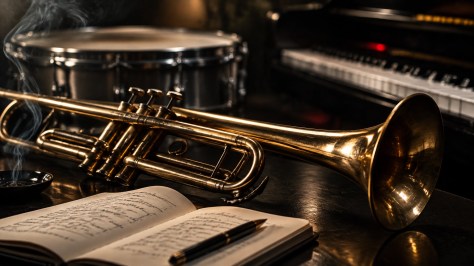
Close-up of a brass trumpet beside an open notebook in a dim jazz studio

A gathering of distinct voices

The guests add character without pulling the album in competing directions. Trumpeter Keyon Harrold appears on โ€œwHIPโ€ and โ€œdrifting,โ€ bringing a jazz presence that feels at home in the albumโ€™s open, fluid atmosphere. Terrace Martin, an artist whose work has long resonated with the Loungeโ€™s musical universe, joins Conrad on โ€œwASH U AWAYโ€ and โ€œNOTHING IS REAL.โ€ His contributions underline the conversation between modern R&B and jazz that runs through the project.

Elsewhere, Vanisha Gould is featured on โ€œA Lonely Detectiveโ€ and โ€œBOREDOMโ€; Ambrรจ appears on โ€œAMBRรˆโ€™S INTERLUDE BUT JAZZโ€; and โ€œThe Wโ€ brings together James Fauntleroy and Astyn Turr. These arenโ€™t simply names lined up for a credits check. Across the album, the collaborations give its world a communal feel, like different artists taking turns at the mic, piano or edge of the conversation.

That quality makes the poetry feel even more at home. A poem spoken by one voice, a trumpet phrasing in another register, a singer leaning into a lyric: each has its own way of telling you where you are. wHIMSY! gives them room to coexist.

Pianistโ€™s hands above a grand piano in a warmly lit late-night recording room

A tracklist with room to drift

The albumโ€™s 18-track edition moves in short, varied scenes, with โ€œGLORYโ€ among the earliest invitations to listen closely. The sequence also makes space for titles that suggest different moods, from โ€œLOVE!โ€ and โ€œBOREDOMโ€ to โ€œHARD!โ€ and โ€œAFTER LAST NIGHT.โ€ โ€œAMBRรˆโ€™S INTERLUDE BUT JAZZโ€ even signals its playfulness right in the name.

Thereโ€™s no need to approach the record like a set of instructions. Start at the beginning and let it unfold, or return to โ€œGLORYโ€ and follow the mood outward. The brief interlude is a small portal into the albumโ€™s larger idea: music doesnโ€™t have to choose between groove and reflection. It can make room for both.

For those who want to explore the collaboratorsโ€™ interplay, โ€œwASH U AWAYโ€ is a good next stop. Destin Conradโ€™s official video for the track with Terrace Martin offers another way into that shared musical space. For full credits and the complete tracklist, see the album listing on Apple Music.

Let the poem stay with you

We marked wHIMSY! on our Instagram calendar with an announcement on August 14 and a release moment on August 21. In this September listening mood, the record still feels made for lingering: not just a smooth soundtrack, but an invitation to notice how sound, language and atmosphere can meet.

Thatโ€™s the pleasure of โ€œGLORY.โ€ It doesnโ€™t interrupt the groove to make room for poetry. It shows that poetry can be part of the groove.

Let the album play late, let the lines settle, and see what you hear on the second pass. Then bring that same attentive ease to the Funk Jazz Lounge 24/7 stream, and tune into the SPOKEN MOMENT vibe, where music, poetry, art and culture share the same room.

Roy DeCarava, the Photographer Who Saw Jazz: ‘the sound i saw’ in Los Angeles

Roy DeCarava, Jackie at the barricade, c. 1956 (detail). Image courtesy of David Zwirner.

There is a particular kind of quiet in a jazz club just before the music begins. A breath held. A glance exchanged. The room listening for what comes next.

Roy DeCarava understood that quiet. His photographs of jazz do not simply show musicians at work; they attend to the human moments around the music: the concentration, the pause, the shared attention. In Los Angeles this fall, David Zwirner brings that way of seeing into focus with the sound i saw, an exhibition curated by Ebony L. Haynes and on view September 19 through October 31, 2026.

More than 130 photographs trace DeCaravaโ€™s exploration of the aural made visual. It is the largest presentation of this body of work since its 1983 showing at the Studio Museum in Harlem. For anyone who loves jazz not just as sound, but as a living culture of people, places, and feeling, the exhibition offers a rare invitation: slow down, look closely, and listen with your eyes.

A photographer who knew how to listen

Born in Harlem in 1919, DeCarava spent more than six decades making photographs of modern life. Jazz was one of his great subjects, but he was not interested in reducing musicians to icons or catching only the most dramatic moment on stage.

โ€œI photograph musicians as people, not as musicians,โ€ he said. What drew him was their commitment. The intensity they brought to life in a particular moment. That sensibility carries through his photographs of figures such as Miles Davis, Billie Holiday, John Coltrane, and Count Basie. We see artists performing, but also resting, talking, and simply being.

The distinction matters. Jazz is made in performance, but it is also made in the listening: in the attention between musicians, in the roomโ€™s response, in the inward focus that precedes a phrase. DeCaravaโ€™s images make space for these quieter dimensions. Their subject is not celebrity. It is presence.

Roy DeCarava, Percy Heath, 1957, silver gelatin print

Roy DeCarava, Percy Heath, 1957. Silver gelatin print. Image courtesy of David Zwirner.

The music beyond the club

One of the pleasures of the sound i saw is the way it moves between jazz and everyday life. Alongside musicians, DeCarava photographed street corners, deliverymen at work, children playing, and riders waiting for the train. The city is not a backdrop to the music; it is part of the composition.

That movement gives the photographs their pulse. The same eye that notices a musicianโ€™s absorbed stillness can find a rhythm in a sidewalk or a pause in a passing face. New York emerges not as a collection of famous landmarks, but as a place made vivid by its people and the patterns of their days.

DeCarava carried a handheld 35mm camera, a tool that let him move easily through the city and meet his subjects on their own terms. He also developed and printed his photographs himself. The resulting black-and-white images are celebrated for their rich tonal range, where shadow is not an absence but a presence of its own: deep, nuanced, and full of life.

That craft lends the photographs an intimacy you can feel. Rather than announcing themselves, they invite a closer look. A scene seems to open gradually, like a tune whose details reveal themselves with each return.

Pictures with room for feeling

The exhibitionโ€™s title carries a lovely tension: sound becomes something seen, while photographs seem to hold an echo. DeCaravaโ€™s project began as a handmade artistโ€™s book, assembled with a visual rhythm and accompanied by his own free-verse poem. The images were not arranged as a catalogue of jazz stars. They formed a personal reflection on life, with jazz and photography as instruments.

The work was first publicly shown at the Studio Museum in Harlem in 1983, when DeCarava presented 125 photographs from the project. This Los Angeles exhibition gathers more than 130, including works from that original presentation. Some not shown since. Haynes has described an exhibition shaped by a sense of intimacy, asking viewers to take their time with the intricacies of human life held in each frame.

That invitation feels especially fitting for DeCarava. His pictures reward attention rather than demand it. They make you wonder what happened just before the shutter clicked, what might be heard just beyond the frame, and what a person carries in a moment of stillness.

Installation view of Roy DeCarava: the sound i saw at David Zwirner, Los Angeles, 2026

Installation view, Roy DeCarava: the sound i saw, David Zwirner, Los Angeles, 2026. Image courtesy of David Zwirner.

SIDE B: a listening room for the photographs

At the adjacent gallery, 616 N Western Avenue, SIDE B: the sounds extends the experience into listening. The roomโ€™s playlist draws on music associated with DeCaravaโ€™s world, including recordings by Miles Davis, John Coltrane, and Billie Holiday. It offers another way to enter the exhibition, not as background music, but as a companion to the images and the lives within them.

The distinction in addresses is useful if youโ€™re planning a visit: the photography exhibition is at David Zwirnerโ€™s 606 N Western Avenue location; SIDE B is next door at 616 N Western Avenue. The listening room is scheduled to run through October 24, while the exhibition remains on view through October 31. David Zwirnerโ€™s exhibition page has the galleryโ€™s full details, and the SIDE B page shares its playlist and program information.

Even for those who canโ€™t make it to Los Angeles, the pairing suggests a beautiful way to spend an evening: put on a record, let the room settle, and give one image your full attention. What do you notice when you stop looking for the famous face and start looking for the human moment?

Seeing jazz as a way of being

DeCaravaโ€™s photographs remind us that jazz is bigger than the stage. It lives in a conversation, a cityโ€™s daily movement, the instinct to listen before answering. His images hold the pauses and the effort as surely as they hold the performance: the sweat and concentration, but also the tenderness and ease.

That is why his work speaks so naturally to anyone who finds music entwined with art, poetry, and culture. The photographs do not tell you what to feel. They make room for feeling to arrive on its own.

If youโ€™re in Los Angeles, take the time to experience the sound i saw before it closes on October 31. And when youโ€™re ready to carry that attentive mood into the rest of your day, tune in to The Funk Jazz Loungeโ€™s 24/7 stream. Let the groove keep company: wherever you are, and whatever the evening has in store.

Jazz and Poetry: 10 Soul-Stirring Reasons This Duo Is Making a Comeback in 2026

There is a particular kind of electricity that happens when a poem meets a jazz rhythm.

The words gain movement. The music gains a voice. A bassline becomes a pulse beneath the story, while the piano leaves just enough space for a sentence to land, breathe, and linger. In 2026, that conversation between jazz and poetry is finding a new generation of listeners: and a much wider stage.

From major festival programming to intimate listening rooms and livestream poetry events, the pairing is no longer a niche experiment. It is part of a broader cultural appetite for work that feels thoughtful, soulful, and alive.

At The Funk Jazz Lounge, this connection has always been central to the experience. Our nationally syndicated show brings Neo Soul, funk, jazz, spoken word, art, and culture into one sophisticated groove. The Poetry Lounge segment carries that spirit forward: a space where the voice and the rhythm meet.

So why is jazz and poetry resonating so deeply right now? Here are ten soul-stirring reasons.

1. Jazz gives poetry room to breathe

Poetry does not need to compete with jazz. It moves through it.

Unlike a rigid musical backdrop, jazz creates an atmosphere of possibility. The drummer can shift the tension. The pianist can answer a phrase. A saxophone can rise after the final word and say what language cannot.

That freedom makes jazz an ideal companion for spoken word. The music supports the poem without telling the listener exactly what to feel. It leaves room for interpretation: and for the listenerโ€™s own memories to enter the performance.

In an age of constant noise, that kind of spaciousness feels luxurious.

2. Spoken word is reclaiming the spotlight

Spoken word has always been powerful, but its visibility has expanded dramatically across stages, screens, festivals, and social platforms. Contemporary poets are bringing personal testimony, social commentary, romance, humor, and history into performances that feel immediate and deeply human.

The resurgence is not simply about poetry returning to the stage. It is about audiences seeking language that speaks directly to the moment.

The work of artists such as aja monet demonstrates how poetry, improvisation, and contemporary jazz can occupy the same artistic space. The result is neither a traditional reading nor a conventional concert. It is something more fluid: an experience built from rhythm, language, and presence.

3. Audiences want music with meaning

A beautiful groove can carry you through an evening. A beautiful groove with something to say can stay with you for years.

Many listeners are looking beyond background music. They want songs and performances that reflect identity, memory, love, community, resistance, and possibility. Jazz brings harmonic sophistication and emotional depth; poetry brings narrative clarity.

Together, they meet a cultural moment that values both feeling and thought.

This is part of what gives The Funk Jazz Lounge its distinctive character. The showโ€™s blend of artists such as Erykah Badu, Maxwell, Jill Scott, Tems, and Leon Thomas with voices including The Last Poets, Gil Scott-Heron, and Saul Williams creates a listening experience that is musically rich and intellectually awake. Explore the full radio show experience to hear how those worlds can flow together.

4. The pairing honors jazzโ€™s living history

Jazz and poetry are not strangers meeting for the first time. Their relationship runs through the history of Black creative expression.

From the literary rhythms of the Harlem Renaissance to the politically charged work of the Black Arts Movement, artists have long used sound and language to document experience, challenge convention, and build community. Spoken-word pioneers and socially conscious musicians helped establish a tradition where the microphone could be both an instrument and a platform.

What feels like a comeback is also a continuation.

In 2026, new artists are drawing from that lineage while adding electronic textures, hip-hop cadences, neo-soul warmth, and global influences. The form is evolving without losing its roots.

Open poetry notebook, vintage jazz record, saxophone mouthpiece, and headphones in a dark lounge setting

5. Genre boundaries are becoming less important

Does a performance need to be labeled jazz, spoken word, hip-hop, soul, or experimental music?

Increasingly, listeners are comfortable with โ€œyes.โ€

The contemporary jazz stream reflects this change. A single hour may move from a smoky instrumental passage to a poetic monologue, then into a beat-driven vocal performance or an unexpected electronic interlude. The transitions are part of the pleasure.

This genre-fluid approach also invites new listeners into jazz. Someone who arrives through poetry may stay for the saxophone. Someone who comes for Neo Soul may discover a classic jazz recording. Curiosity becomes the bridge.

That spirit is visible in the programming of events such as the Monterey Jazz Festival and the wide-ranging calendars of organizations including SFJAZZ and the Stanford Jazz Festival.

6. Livestreamed poetry events make intimacy global

Poetry has always depended on intimacy: one voice, one room, one shared moment.

Livestreaming does not eliminate that intimacy. Done well, it extends it.

A listener in Atlanta, London, Miami, or Los Angeles can enter a poetry-and-jazz performance happening hundreds or thousands of miles away. They can hear the roomโ€™s silence before a line, feel the audience respond, and participate in a cultural gathering without leaving home.

Major jazz organizations have helped make this format feel natural. Jazz at Lincoln Centerโ€™s Jazz Live brings concerts, conversations, and special programming to viewers on connected devices. Meanwhile, venues such as The Jazz Gallery continue to list live and livestream options, creating new pathways for discovery.

For poets and musicians, that reach can be transformative. A local collaboration can become a global conversation.

7. Hybrid events meet modern life

Not everyone can make a late-night show in New York. Not everyone lives near a jazz club, literary venue, or experimental arts space. Work schedules, caregiving, travel, and geography all shape how people experience culture.

Hybrid programming makes room for real life.

You can attend in person when the evening calls for velvet curtains and candlelight. Or you can tune in from your living room, headphones on, with the city quiet outside your window. Both forms of attention matter.

This flexibility is especially meaningful for poetry, where the quality of listening often matters more than the size of the room. A well-produced livestream poetry event can preserve the emotional focus of a small gathering while opening the door to a much larger audience.

8. Jazz and poetry create space for dialogue

Jazz is built on conversation. One musician proposes an idea; another responds. The ensemble listens, adapts, and creates something that did not exist before.

Poetry works similarly. It asks us to consider another personโ€™s interior world. It can name what has been overlooked, bring history into the present, or offer a new way to understand the ordinary.

That makes the pairing especially relevant to culturally engaged audiences. It is entertainment, certainly: but it is also an invitation to think, feel, and remain open.

International Jazz Day, organized with UNESCO and global partners, continues to frame jazz as a language of dialogue, freedom of expression, and cultural understanding. Poetry belongs naturally within that conversation.

9. The experience feels made for intentional listening

There is a difference between hearing music and listening to it.

Jazz and poetry reward attention. They encourage you to notice the pause before a phrase, the change in a chord, the breath beneath a line. They invite you to put the phone down: or at least use it to find the right playlist: and let the moment unfold.

This is why the duo works so beautifully in a lifestyle setting. Put on a contemporary jazz stream while preparing dinner. Let spoken word accompany a late-night drive. Play a podcast archive while journaling, sketching, or simply watching the lights move across the room.

Music, poetry, art, and culture become part of the texture of your day rather than an interruption to it.

Poet performing with a jazz trio during a livestreamed intimate cultural event

10. The connection is deeply communal

At its heart, jazz and poetry are about gathering.

They create a space where people can arrive with different backgrounds, references, and experiences, then meet inside a shared rhythm. The performer is not speaking into a void. The musicians are not playing in isolation. The audience completes the exchange through attention.

That sense of community is just as important online as it is in a club. A live chat, a shared playlist, a podcast recommendation, or a message sent after a performance can extend the conversation long after the final note.

The The Funk Jazz Lounge Gallery reflects this larger vision: a world where sound exists alongside imagery, ideas, and cultural memory. The Lounge is not only a place to hear music. It is a way to move through the world with more style, curiosity, and feeling.

Let the words find the rhythm

The return of jazz and poetry is not a revival built on nostalgia alone. It is a living movement: one that understands the past, responds to the present, and leaves room for what comes next.

The poetry is sharper. The jazz is freer. The platforms are wider. And the need for meaningful connection has never been clearer.

Whether you are discovering spoken word over jazz for the first time or returning to a sound that has always felt like home, make space for the experience. Put on your headphones. Turn down the lights. Let the bassline settle in.

Then tune into The Funk Jazz Lounge, where Neo Soul, funk, jazz, poetry, art, and culture share the same room( whenever you are ready to enter.)